How Do You Build Customer Data Export for a SaaS Product?
Quick Answer: Build SaaS data export by defining which tenant records, relationships, files, and audit history belong in the package. Authorize requests at the tenant boundary, create a consistent snapshot, process large exports asynchronously, encrypt the result, and provide a short-lived download. Record who requested and accessed it, then delete generated packages automatically.
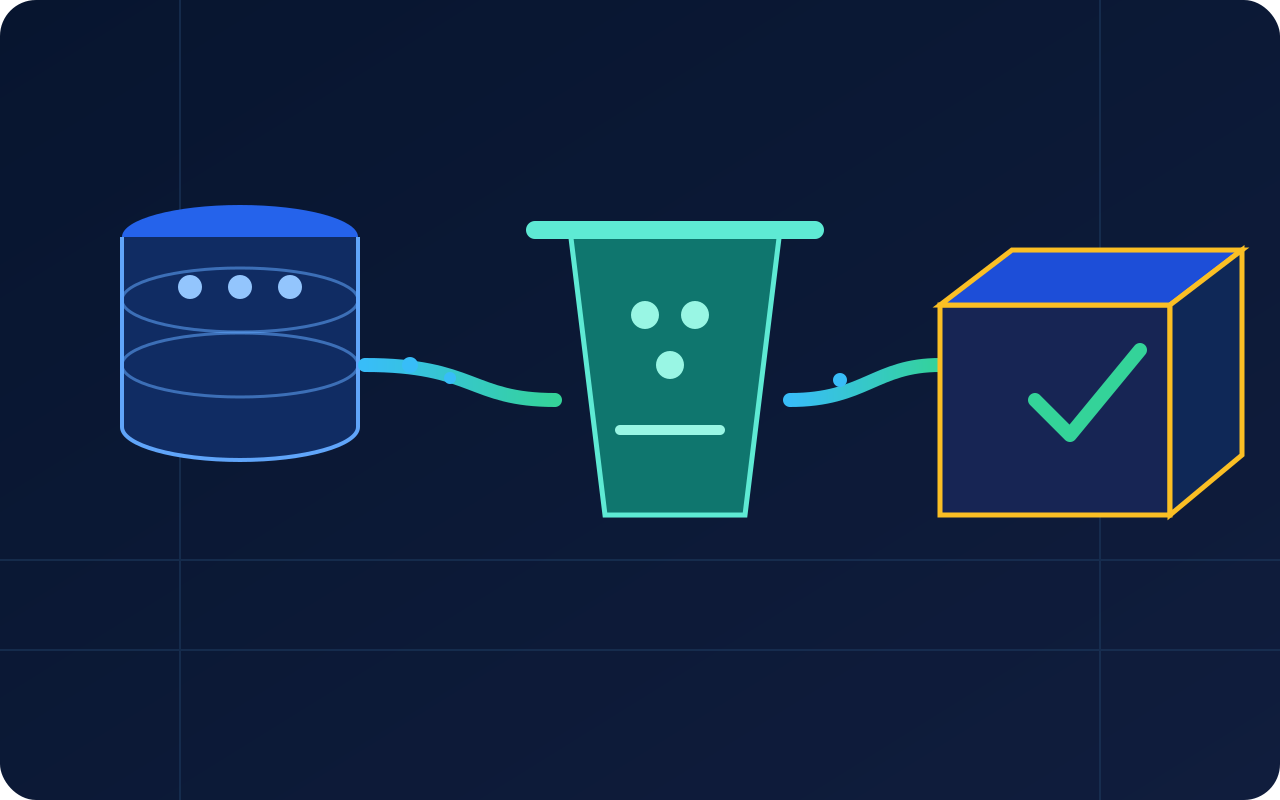
What Should a Customer Data Export Contain?
Map the tenant's primary records, relationships, attachments, comments, configuration, and relevant audit history. Distinguish customer-owned data from platform telemetry, internal risk signals, other tenants' information, and licensed third-party content. Document field meanings and stable identifiers so the package is usable outside the product.
Choose formats according to the audience and structure. CSV can suit flat tables, JSON can preserve nested relationships, and original file formats should remain intact where practical. Include a manifest with generation time, scope, schema version, file checksums, and known exclusions.
How Should Large Exports Be Generated Safely?
Authorize the requester against the current tenant and export scope, then queue a bounded background job. Use a consistent snapshot or clearly documented cutoff so records do not contradict each other while the export runs. Paginate by stable keys and make steps resumable rather than holding one long database transaction.
Limit concurrency, memory, storage, and repeated requests. Encrypt temporary files and generated packages, keep them outside public storage, and expose only a short-lived authorized download. Avoid placing personal data, package URLs, or credentials in logs and notifications.
| Export concern | Design control | Evidence |
|---|---|---|
| Tenant isolation | Authorized scoped query | Request and access audit |
| Inconsistent records | Snapshot or declared cutoff | Manifest generation time |
| Large volume | Queued paginated processing | Progress and resource limits |
| Sensitive package | Encryption and expiring download | Automatic deletion record |
An export is a temporary high-value copy of customer data and should receive controls appropriate to that concentration of information.
How Do You Prove the Export Is Reliable?
Test tenants with empty, large, multilingual, deleted, archived, and partially migrated records. Reconcile counts and checksums against source systems, validate relationships, and confirm that denied users cannot request or retrieve another tenant's package.
Track request success, generation time, package size, failure stage, download completion, and deletion. HashBaze helps SaaS teams design tenant-safe export boundaries, asynchronous generation, secure delivery, and verification that supports portability and enterprise requirements.
Frequently asked questions
Clear answers to the most important questions covered in this guide.
How Can HashBaze Help With This Work?
Explore our SaaS development services or bring us your current product challenge for a focused technical conversation.